OEEA02

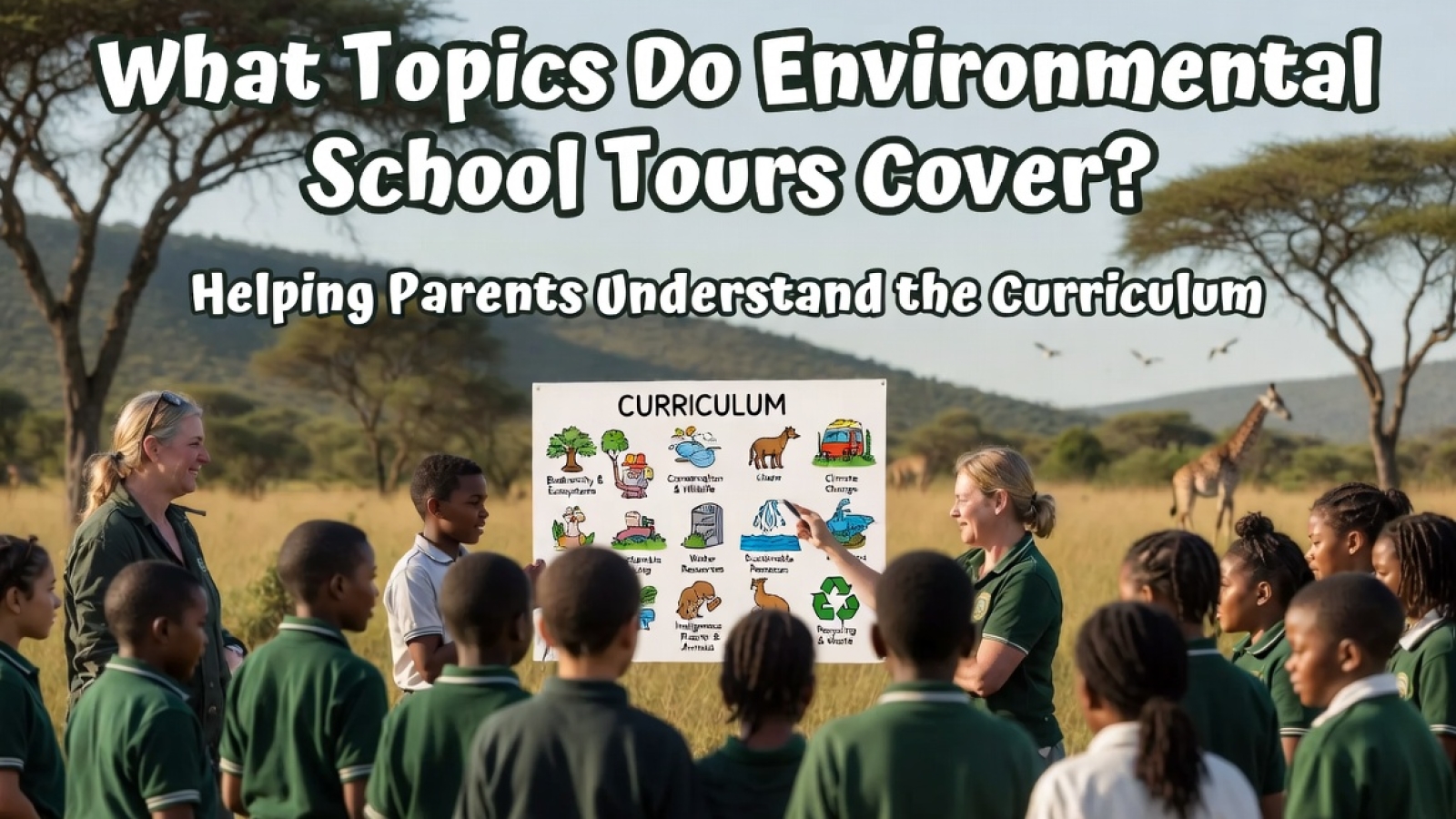
What Topics Do Environmental School Tours Cover?

Helping Parents Understand the Educational Value Behind Outdoor Environmental Learning Experiences

Some Lessons Are Better Learned With Mud on Your Shoes

There’s only so much a child can absorb from a textbook.

You can explain ecosystems in a classroom.
You can show photos of wetlands on a projector.
You can define biodiversity on an exam paper.

But when a student stands quietly beside a river, hears birds calling across the trees, watches insects moving beneath rocks, and feels the texture of soil in their hands, something changes.

Environmental education becomes real.

That’s why environmental school tours have become such an important part of modern learning across South Africa and beyond. These tours combine science, geography, sustainability, teamwork, and experiential learning into one immersive educational experience.

For many parents, however, questions naturally arise:

  • What exactly do students learn on these tours?
  • Are they educational or just recreational?
  • How do they connect to the school curriculum?
  • What skills do children gain outside the classroom?

The answer is: far more than most people realize.

Environmental school tours are designed to help students understand not only nature itself, but also humanity’s relationship with the environment, sustainability, conservation, and responsible citizenship.

In this article, we’ll explore:

  • The key topics environmental school tours typically cover
  • How these experiences support classroom learning
  • The life skills students develop outdoors
  • Why experiential education improves long-term understanding
  • What parents can expect from a quality environmental education program

By the end, you’ll have a much clearer understanding of the educational value these tours provide — and why they can leave such a lasting impact on young learners.


Why Environmental Education Matters More Than Ever

Today’s Children Are Growing Up in a World Facing Environmental Challenges

Modern students are inheriting a planet dealing with:

  • climate change,
  • water scarcity,
  • pollution,
  • habitat destruction,
  • biodiversity loss,
  • and growing sustainability concerns.

Environmental education helps children understand these realities in practical, age-appropriate ways.

More importantly, it helps them understand that they can play a role in protecting the natural world.

According to UNESCO, environmental education encourages learners to develop:

  • environmental awareness,
  • critical thinking,
  • problem-solving skills,
  • and responsible decision-making.

Outdoor learning also improves engagement because students actively experience concepts instead of simply memorizing them.

As naturalist David Attenborough famously said:

“No one will protect what they don’t care about; and no one will care about what they have never experienced.”

That idea sits at the heart of environmental school tours.

Practical Tip for Parents

Ask tour providers how their activities connect to school subjects and learning outcomes.

Strong programs intentionally combine fun with curriculum-based education.


1. Ecosystems and Biodiversity

Nature Functions Like a Giant Living Puzzle

One of the most common topics covered during environmental school tours is ecosystems.

Students learn how living organisms interact with:

  • plants,
  • animals,
  • insects,
  • water systems,
  • climate,
  • and soil.

Instead of viewing nature as separate parts, children begin understanding how ecosystems function as interconnected systems.

Topics often include:

  • food chains and food webs,
  • predator-prey relationships,
  • habitats,
  • indigenous species,
  • invasive species,
  • and biodiversity conservation.

Students may participate in:

  • nature walks,
  • species identification,
  • bird watching,
  • pond studies,
  • or ecosystem mapping activities.

Research from National Geographic Society shows that experiential environmental learning improves ecological literacy and long-term retention of scientific concepts.

Why This Matters

Understanding biodiversity helps children appreciate why conservation matters in everyday life.

Practical Tip

Encourage your child to talk about the species they observed after the tour. Reflection strengthens learning retention.


2. Water Conservation and Aquatic Ecosystems

Water Becomes More Valuable When Students Understand How Fragile It Is

In many parts of South Africa, water scarcity is a major environmental concern.

Environmental school tours often include lessons about:

  • rivers,
  • wetlands,
  • dams,
  • water cycles,
  • pollution,
  • and sustainable water use.

Students may test water quality, study aquatic organisms, or examine how human activities affect water systems.

These activities help learners understand:

  • where clean water comes from,
  • how pollution spreads,
  • and why conservation is essential.

According to World Wildlife Fund, freshwater ecosystems are among the most threatened habitats globally.

Hands-on exposure helps children connect environmental responsibility to everyday behavior.

Practical Tip

After the tour, involve children in simple water-saving habits at home to reinforce what they learned.


3. Climate Change and Sustainability

Today’s Students Will Live With Tomorrow’s Environmental Consequences

Climate education is becoming an increasingly important component of environmental tours.

Students are introduced to concepts such as:

  • global warming,
  • carbon footprints,
  • renewable energy,
  • recycling,
  • sustainable living,
  • and environmental stewardship.

Importantly, quality programs avoid fear-based teaching.

Instead, they focus on:

  • awareness,
  • practical solutions,
  • and responsible action.

Students may explore:

  • composting systems,
  • solar energy demonstrations,
  • waste management practices,
  • or sustainable agriculture projects.

According to United Nations Environment Programme, early environmental education plays an important role in building long-term sustainability awareness.

As climate activist Greta Thunberg has emphasized:

“You are never too small to make a difference.”

That message resonates strongly with young learners.

Practical Tip

Look for programs that encourage practical environmental action rather than only discussing problems.


4. Wildlife Conservation and Human Impact

Children Learn That Conservation Is About People Too

Many environmental tours introduce students to conservation challenges facing wildlife and natural habitats.

Topics often include:

  • poaching,
  • habitat destruction,
  • pollution,
  • deforestation,
  • endangered species,
  • and responsible tourism.

Students begin understanding how human decisions affect ecosystems and animal populations.

In African environmental education settings, learners may study:

  • savanna ecosystems,
  • indigenous wildlife,
  • conservation parks,
  • or anti-poaching initiatives.

Seeing conservation efforts firsthand can be deeply impactful for students.

According to International Union for Conservation of Nature, education plays a vital role in long-term biodiversity protection.

Practical Tip

Ask your child what surprised them most about conservation challenges. Emotional engagement often drives deeper learning.


5. Geography and Earth Sciences

The Landscape Itself Becomes the Classroom

Environmental school tours often reinforce geography and earth science concepts in practical ways.

Students may learn about:

  • landforms,
  • erosion,
  • rock formations,
  • weather patterns,
  • soil composition,
  • and natural resource management.

Instead of memorizing definitions, they observe these systems directly in nature.

This kind of experiential learning helps abstract concepts become tangible.

Research in educational psychology consistently shows that hands-on learning improves understanding and memory retention compared to passive instruction alone.

Practical Tip

Children often remember outdoor experiences for years. Encourage them to journal or photograph what they observe during tours.


6. Indigenous Knowledge and Cultural Environmental Practices

Environmental Education Is Also About Human Wisdom

Some environmental programs incorporate indigenous environmental knowledge and traditional ecological practices.

Students may learn:

  • how local communities historically interacted with nature,
  • traditional conservation methods,
  • sustainable farming practices,
  • or cultural relationships with the land.

This broadens environmental understanding beyond science alone.

It teaches students that sustainability is not a new idea — many communities have practiced environmental stewardship for generations.

In African contexts, this can help children appreciate both environmental and cultural heritage simultaneously.

Practical Tip

Programs that combine science with cultural understanding often create richer educational experiences.


7. Leadership, Teamwork, and Personal Growth

Some of the Biggest Lessons Have Nothing to Do With Exams

One of the most overlooked benefits of environmental school tours is personal development.

Outdoor learning environments naturally encourage:

  • teamwork,
  • communication,
  • resilience,
  • confidence,
  • leadership,
  • and problem-solving.

Students may participate in:

  • group challenges,
  • navigation exercises,
  • conservation projects,
  • or collaborative environmental activities.

Away from screens and classroom pressures, many children develop greater independence and self-confidence.

According to child development research from American Academy of Pediatrics, outdoor experiences support emotional well-being, social development, and physical health.

Practical Tip

Parents often focus only on academic outcomes, but personal growth is one of the most valuable parts of these experiences.


How Environmental Tours Support the School Curriculum

Outdoor Education Isn’t Separate From Learning — It Expands It

Environmental tours often reinforce multiple school subjects simultaneously, including:

  • Natural Sciences,
  • Geography,
  • Life Sciences,
  • Social Sciences,
  • Environmental Studies,
  • and Life Orientation.

Students learn through:

  • observation,
  • participation,
  • experimentation,
  • reflection,
  • and discussion.

This strengthens both understanding and engagement.

Experiential education also helps students who may struggle with traditional classroom learning styles.

For many children, learning becomes more meaningful when they can physically experience concepts in real-world environments.

Practical Tip

Ask schools or tour organizers for curriculum links and educational objectives before the trip.


What Parents Should Look for in a Quality Environmental Tour Program

Not All Educational Tours Offer the Same Value

A strong environmental education program should include:

  • qualified facilitators,
  • age-appropriate activities,
  • clear learning outcomes,
  • safety procedures,
  • structured educational content,
  • and interactive experiences.

Look for programs that balance:

  • education,
  • engagement,
  • physical activity,
  • and reflection.

Good programs encourage curiosity rather than overwhelming students with lectures.

Questions Parents Can Ask

  • What educational topics are covered?
  • How are activities supervised?
  • Are facilitators trained in environmental education?
  • How does the tour support the curriculum?
  • What safety measures are in place?
  • Are students encouraged to participate actively?

Practical Tip

The best programs leave children excited to keep learning long after the tour ends.


Environmental School Tours Help Children See the World Differently

Environmental school tours are about far more than outdoor recreation.

They help students:

  • understand ecosystems,
  • explore sustainability,
  • develop environmental awareness,
  • strengthen teamwork,
  • and connect classroom learning to the real world.

Most importantly, they help children build a relationship with nature itself.

And that relationship matters.

Because children who understand the natural world are more likely to protect it, respect it, and care about its future.

In a world increasingly shaped by environmental challenges, that may be one of the most valuable lessons education can offer.

From Concrete Classrooms to Living Lessons: Why Gauteng Learners Need Nature More Than Ever

In Gauteng, children grow up in a fast-moving world filled with highways, shopping centres, traffic lights, and glowing screens. For many learners, nature has become something they see in textbooks instead of something they experience firsthand. But here’s the thing — education comes alive when children step outside the classroom and into the wild.

That’s where Outdoor Environmental Education Africa (OEEA) changes the game.

Imagine a classroom without walls. A lesson where ecosystems are explored while walking through the bushveld. A science activity where learners observe wildlife instead of reading about it in a workbook. That’s the power of outdoor education. It transforms learning from memorisation into meaningful experience.

For over 20 years, OEEA has helped Gauteng schools reconnect learners with the natural world through CAPS-aligned educational tours that combine adventure, environmental awareness, leadership development, and curriculum outcomes.

In this article, we’ll explore why environmental education matters more than ever, how OEEA supports the CAPS curriculum, and why schools across Johannesburg, Pretoria, Midrand, Soweto, and surrounding areas continue to trust OEEA for unforgettable educational experiences.


Why Today’s Learners Are Craving Real-World Experiences

There’s a growing concern among educators worldwide: children are spending less time outdoors than any previous generation.

Between smartphones, social media, gaming, and urban lifestyles, many learners have become disconnected from nature. According to research published by the National Recreation and Park Association, children who spend regular time outdoors show improved focus, reduced stress, stronger social skills, and better emotional well-being.

South Africa’s urban learners face this challenge daily. Gauteng is the country’s most urbanised province, and many children rarely experience rivers, mountains, wildlife, or natural ecosystems outside of television screens.

This disconnect has consequences.

When learners cannot physically connect with the environment, concepts like biodiversity, conservation, climate responsibility, and sustainability become abstract ideas rather than lived experiences.

As environmentalist David Attenborough famously said:

“No one will protect what they don’t care about; and no one will care about what they have never experienced.”

OEEA tours bridge that gap.

By placing learners directly into nature-based learning environments, students begin to understand ecosystems not as chapters in a textbook, but as living systems they are part of.

Practical Tip for Schools

Incorporate at least one outdoor learning experience per academic year for Intermediate Phase learners to improve engagement and curriculum retention.


CAPS Alignment: Turning School Tours into Powerful Educational Tools

For many schools, educational tours are no longer viewed as “extras.” They are strategic teaching opportunities that reinforce classroom learning while meeting CAPS outcomes.

OEEA has carefully designed its programmes for Grades 4–7 to align with multiple Learning Areas across the CAPS curriculum.

That means teachers can confidently justify educational tours as curriculum-linked experiences rather than recreational outings.

Natural Sciences & Technology Comes Alive Outdoors

There’s a massive difference between reading about ecosystems and standing inside one.

Learners participating in bush walks, wildlife observation, birdwatching, and environmental investigations develop a deeper understanding of biodiversity, food chains, adaptation, and conservation.

At destinations like Ukutula Conservation Centre, learners engage directly with environmental concepts through guided educational activities.

Research from the University of Illinois found that experiential learning significantly improves information retention compared to traditional lecture-based learning.

When students physically experience nature, the lessons stick.

CAPS Outcomes Supported:

  • Ecosystems and biodiversity
  • Living things and life processes
  • Energy and environmental systems
  • Planet Earth and beyond

Practical Tip for Teachers

Use post-tour ecosystem mapping activities to strengthen assessment evidence for Natural Sciences.


Leadership, Confidence, and Life Skills Grow Faster Outdoors

Something remarkable happens when learners step outside their comfort zones.

A shy learner suddenly volunteers to lead a hiking group. A quiet student discovers confidence during team-building activities. Friendships strengthen. Communication improves.

Outdoor education develops far more than academic knowledge.

According to the American Institutes for Research, outdoor education programmes can improve leadership skills, conflict resolution, self-confidence, and collaborative problem-solving.

OEEA integrates these developmental opportunities into every tour through:

  • Team-building challenges
  • Leadership exercises
  • Group problem-solving activities
  • Peer accountability tasks
  • Outdoor adventure experiences

These experiences align directly with CAPS Life Orientation and Life Skills outcomes.

As leadership expert Simon Sinek once said:

“Leadership is not about being in charge. It is about taking care of those in your charge.”

Learners begin developing empathy, resilience, responsibility, and teamwork — skills that serve them long after the tour ends.

Practical Tip for Schools

Encourage learners to complete reflection journals during tours to strengthen emotional intelligence and self-awareness.


Geography Stops Being Theory — And Starts Becoming Real

Maps, landforms, climates, and biomes can feel distant when taught exclusively in classrooms.

But place learners in the Drakensberg mountains or the bushveld, and suddenly geography becomes real.

One of the greatest strengths of OEEA tours is the ability to transform abstract concepts into tangible learning experiences.

Learners participate in:

  • Orienteering and compass navigation
  • Biome identification
  • Landform observation
  • River and water system studies
  • Sustainability discussions

Seeing erosion patterns firsthand or identifying different vegetation zones creates deeper understanding than worksheets alone ever could.

A report by the Education Endowment Foundation found that experiential education can significantly improve learner engagement and motivation.

At OEEA, geography becomes an adventure.

Practical Tip for Teachers

Assign learners a field-report task where they document physical features and environmental observations during the tour.


Environmental Responsibility Begins With Connection

Children are more likely to protect what they understand.

Environmental education is no longer optional in today’s world. Climate change, biodiversity loss, water scarcity, and pollution are realities that future generations will inherit.

That’s why OEEA’s conservation-focused programmes are so important.

Learners are introduced to:

  • Sustainable living practices
  • Conservation principles
  • Leave-no-trace ethics
  • Wildlife protection
  • Water conservation awareness

These lessons build environmental stewardship from a young age.

According to UNESCO, environmental education improves critical thinking and empowers young people to make informed decisions about sustainability.

When learners experience the beauty of nature firsthand, they begin to understand why protecting it matters.

As conservationist Jane Goodall explained:

“What you do makes a difference, and you have to decide what kind of difference you want to make.”

That message resonates powerfully during outdoor learning experiences.

Practical Tip for Schools

Create a post-tour environmental campaign where learners apply what they learned back at school.


Educational Tours That Support Formal Assessment

Teachers often face the challenge of finding meaningful ways to assess real understanding.

This is where OEEA tours become especially valuable.

The programmes support School-Based Assessment (SBA) through authentic learning opportunities linked directly to CAPS requirements.

Possible assessment activities include:

Assessment TypeCAPS SubjectExample Activity
Project / Research TaskNatural SciencesFood-web mapping or ecosystem report
Written ReportSocial SciencesBiome analysis and mapping
Oral PresentationEnglish HL/FALTour reflection presentation
Reflection JournalLife OrientationPersonal growth reflections
STEAM ChallengeNST / TechnologySustainable shelter design

These assessments encourage learners to think critically, collaborate, communicate, and solve problems creatively.

Educational psychologist John Dewey famously stated:

“Education is not preparation for life; education is life itself.”

OEEA’s approach reflects exactly that philosophy.

Practical Tip for Teachers

Request the OEEA Teacher Resource Pack to simplify SBA planning and curriculum integration.


Why Gauteng Schools Continue to Trust OEEA

Organising a school tour can feel overwhelming.

Teachers and principals must consider transport, accommodation, safety, curriculum relevance, catering, supervision, budgeting, and communication with parents.

That’s why schools value experienced operators.

For more than two decades, OEEA has built a strong reputation for delivering safe, organised, and educationally meaningful experiences.

Schools across Gauteng appreciate that OEEA provides:

  • Full programme planning and coordination
  • Transport from the school gate
  • CAPS-linked educational activities
  • Qualified environmental educators
  • Accommodation and meals
  • Halal and dietary catering options
  • 24/7 emergency support
  • Post-tour feedback reports

One Gauteng teacher shared:

“The kids came back completely changed. They were talking about ecosystems at break time!”

Another educator explained:

“Ronel takes care of everything. I just confirm the date and count the kids.”

That level of trust comes from years of consistency, professionalism, and passion for education.

Practical Tip for Schools

Book educational tours at least one school term in advance to secure preferred dates and destinations.


The Most Popular OEEA Destinations for Gauteng Learners

Every destination offers a different educational experience.

Ukutula Conservation Centre

Located approximately two hours from Johannesburg, Ukutula remains one of the most popular destinations for Intermediate Phase learners.

Highlights include:

  • Lion walks
  • Guided game drives
  • Wildlife interaction
  • Bushveld ecology lessons
  • Environmental education activities

This destination strongly supports Natural Sciences, Life Skills, and Life Orientation outcomes.

Drakensville and Berg Adventures

The Northern Drakensberg offers breathtaking opportunities for:

  • Geography in action
  • Mountain ecosystem exploration
  • Hiking and physical development
  • River studies
  • Cultural and historical learning

These programmes are ideal for Grades 5–7.

Highveld and Bushveld Camps

Closer-to-home camps provide budget-friendly options while still delivering valuable educational outcomes.

Learners enjoy:

  • Team-building
  • Nature walks
  • Overnight bush experiences
  • Environmental awareness activities

Leadership and Teambuilding Programmes

These programmes focus specifically on communication, resilience, leadership, and collaboration skills.

Perfect for leadership groups, prefects, and Intermediate Phase learners.

Practical Tip for Schools

Match destinations to curriculum priorities and grade-level learning goals before booking.


Outdoor Education Is an Investment in the Future

The world learners are growing into will demand adaptability, environmental awareness, collaboration, and critical thinking.

Traditional classrooms remain important — but some of life’s most valuable lessons happen outdoors.

Educational tours create opportunities for learners to:

  • Build confidence
  • Strengthen friendships
  • Develop leadership skills
  • Understand sustainability
  • Connect learning to real life
  • Appreciate South Africa’s natural heritage

And perhaps most importantly, they inspire curiosity.

Curious learners become engaged learners.

Engaged learners become future leaders.

Outdoor Environmental Education Africa continues to play a vital role in shaping environmentally conscious young South Africans through meaningful, CAPS-aligned educational experiences.

For Gauteng schools seeking more than just a school trip, OEEA offers something far more valuable:

A chance to transform education into an unforgettable adventure.


Ready to Plan Your Next Educational Tour?

Outdoor Environmental Education Africa
Johannesburg, Gauteng, South Africa

Website: www.oeea.co.za
Email: info@oeea.co.za

For school presentations, principal meetings, quotations, and tailored tour proposals, contact OEEA through the website contact form.

Because the best classrooms don’t always have four walls.

Planner

🌿 What a School Tour Actually Looks Like (From Start to Finish)

Planning a school tour can feel like a big decision.

There are questions to answer, details to manage, and a quiet responsibility humming in the background: getting it right for your learners. If that sounds familiar, you’re not alone — and you’re exactly who this post is for.

Here’s what the process actually looks like when you plan a tour with Outdoor Environmental Education Africa.


Step 1: The initial conversation

It starts with a simple enquiry.

You tell us:

  • your grade(s)
  • your rough dates
  • your goals for the experience

From there, we begin shaping options that make sense for your school — not a one-size-fits-all package, but a programme built around your learners, timelines, and expectations.


Step 2: Thoughtful planning & coordination

This is where the magic happens quietly in the background.

We coordinate:

  • suitable venues and activities
  • age-appropriate programming
  • schedules, logistics, and flow

You’re kept informed and supported, without being buried in unnecessary admin. The aim is clarity, not complexity.


Step 3: Preparation made manageable

Once a tour is confirmed, we guide you through what comes next.

This includes:

  • clear timelines
  • practical information
  • preparation details for learners and parents

Nothing is rushed. Nothing is vague. You know what’s happening, when it’s happening, and who’s responsible for what.


Step 4: The tour itself

This is the part learners remember.

With planning in place and expectations clear, the experience unfolds as it should — structured, engaging, and purposeful. Learners are challenged, supported, and encouraged to step outside their comfort zones in a safe, supervised environment.

And for educators?
You’re present with your learners, not scrambling behind the scenes.


Step 5: Returning with more than memories

A well-run tour doesn’t end when the bus pulls back in.

Learners return with:

  • shared experiences
  • renewed confidence
  • stories, lessons, and growth that carry back into the classroom

That’s the real value of outdoor education — the impact lasts well beyond the final day.


You don’t have to do this alone

At Outdoor Environmental Education Africa, school tours and day trips aren’t treated as once-off events. They’re carefully considered experiences, supported every step of the way.

If you’ve been hesitating because the process feels overwhelming, know this: support and structure change everything.


🌱 Ready to take the next step?

If you’d like to explore what a tour or day trip could look like for your school, we’d love to help.

📩 Request a quotation to start the conversation.
📝 Already have dates in mind? Complete our booking form and we’ll guide you through the next steps.

Sometimes, understanding the process is all it takes to move forward with confidence.

pexels-danya-gutan-1529084-2949529

🌿 Why Outdoor Education Matters (Now More Than Ever)

In a world of screens, schedules, and constant stimulation, learners are spending less time outdoors than ever before — and it’s showing.

Attention is stretched thin.
Stress levels are rising.
Opportunities for real-world connection are shrinking.

Outdoor education offers something profoundly important in response: space to breathe, move, explore, and grow.


Learning comes alive outside the classroom

Outdoor education isn’t about replacing the classroom — it’s about enriching it.

When learners step outside, learning becomes:

  • experiential rather than theoretical
  • collaborative rather than isolated
  • memorable rather than momentary

Concepts stick because they’re lived, not just taught.


It builds skills learners actually need

Beyond curriculum outcomes, outdoor education helps develop:

  • resilience and problem-solving
  • teamwork and communication
  • independence and confidence

These are the skills learners carry forward — into school, into adulthood, and into the world beyond.


Nature fosters connection and responsibility

Spending time outdoors nurtures an understanding of the natural world and our place within it. Learners begin to see that environmental responsibility isn’t abstract — it’s personal.

Outdoor education encourages:

  • curiosity about ecosystems
  • respect for the environment
  • a sense of stewardship for the future

Those lessons matter now more than ever.


Structured, supported, and purposeful

At Outdoor Environmental Education Africa, outdoor education is never “just an outing”.

Our programmes are:

  • intentionally designed
  • carefully planned
  • aligned with meaningful educational outcomes

Whether through multi-day tours or focused day trips, each experience is built to support learning while offering learners something truly enriching.


An investment in learners, not just a break from routine

Outdoor education isn’t time away from learning — it’s time invested in it.

It reminds learners that education is dynamic, engaging, and connected to the world around them. And it reminds schools that powerful learning doesn’t only happen at a desk.


🌿 Ready to take learning beyond the classroom?

If you’re looking for meaningful ways to support your learners this year, outdoor education is a powerful place to start.

At Outdoor Environmental Education Africa, we design and facilitate structured, purposeful school tours and day trips that bring learning to life — safely, thoughtfully, and with care.

📩 Request a quotation to explore options that suit your school’s needs, timelines, and learners.
📝 Prefer to plan ahead? Complete our booking form and we’ll guide you through the next steps.

Sometimes, all it takes is one experience outside the classroom to make a lasting difference.

pexels-ekaterina-bolovtsova-5036756 Resized

🎉2026 New Year’s Resolutions: Say Yes to Adventure

New year. Clean slate. Fresh diaries.

And while personal resolutions often include things like drink more water and answer emails faster (we see you 👀), schools have resolutions too — whether they’re written down or not.

This year, what if one of them was simple?

Say yes to adventure.


Learning doesn’t only happen behind a desk

Some of the most powerful lessons aren’t found in textbooks. They happen:

  • outdoors
  • in shared challenges
  • in moments of independence and discovery

School tours and day trips offer learners the chance to grow in ways the classroom alone simply can’t — building confidence, curiosity, teamwork, and a deeper connection to the world around them.

And yes, it’s still very much educational.


The planning doesn’t have to be overwhelming

We know that the idea of organising a tour can feel daunting. That’s where we come in.

At Outdoor Environmental Education Africa, we take care of the planning, coordination, and logistics — transforming what could be a stressful process into one that feels structured, supported, and manageable.

You don’t need to juggle venues, schedules, or endless details.
You just need to decide it’s time.


Big adventures and bite-sized experiences

Not ready for a multi-day tour just yet? No problem.

We also facilitate carefully planned day trips — ideal for schools looking to offer meaningful outdoor experiences without the commitment of an overnight programme. Shorter in duration, rich in impact.

Adventure doesn’t have to be all-or-nothing.


Make 2026 the year learners remember

The tours learners talk about years later aren’t the ones that were “easy” — they’re the ones that challenged them, inspired them, and brought learning to life in unexpected ways.

This year, give your learners:

  • something to look forward to
  • something to grow from
  • something they’ll carry with them long after the buses return

Ready to say yes?

📩 Request a quotation and let’s explore options that suit your school’s needs.
📝 Already decided? Complete our booking form and we’ll guide you through the next steps.

New year. New energy. New adventures.

Let’s make 2026 one to remember. 🌿

pexels-sebastian-214573

Buckle Up, Buttercup – It’s Time to Book Your Next Big School Adventure! 🌿🐍🔥

Warning: This is not your average “pack a sandwich and sit in a bus” kinda school trip. Oh no. This is Outdoor Environmental Education Africa—where we turn kids into wild explorers, teachers into tour legends, and your inbox into a flood of thank-you notes from happy parents.

So, grab your clipboard, take a deep breath, and let’s dive into the wild, wacky world of school camps, day trips, leadership programs, and unforgettable outdoor education—OEEA style.


🌟 Why Settle for Ordinary When You Can Have Outrageous (in the best way)?

At OEEA, we believe education shouldn’t come with four walls and fluorescent lights. It should come with:

✅ Zip lines that make your heart sing
✅ Campfires that tell ghost stories better than any screen
✅ Bush walks, animal encounters, treasure hunts & survival games
✅ Friendships formed over marshmallows and muddy sneakers

Whether it’s a Grade R day trip or a Senior Phase leadership camp, we’re all about learning through laughter, adventure, and the great outdoors. (Yes, even when it rains. Especially when it rains.)


💬 Don’t Just Take Our Word for It…

“My kids haven’t stopped talking about the camp! They now think snakes are cool, teamwork is fun, and that I should totally learn how to make stokbrood.” – Slightly Exhausted But Impressed Teacher

“BEST. DAY. EVER.” – One very muddy, very happy 11-year-old


🎒 Ready to Get the Ball Rolling? Here’s How:

Planning your school trip with OEEA is easier than teaching a classroom full of sugar-hyped 9-year-olds how to sit still after break (read: actually doable).

Click here to request a quote
Click here to make a booking

Whether you’re booking for Term 3 or dreaming ahead for next year, don’t wait—our dates disappear faster than cupcakes at snack time.


🚨 Hot Tip: We Fill Up Fast!

With our calendar booking up quicker than you can say “Where’s my whistle?”, it’s best to get in early. You bring the kids—we bring the action, the organisation, and the controlled chaos.

So come on, get out of the classroom and into the wild.
We’ll be here with open arms, muddy boots, and a bucket of adventure.


📞 Questions? Random thoughts? Just want to hear a campfire joke?

Slide into our inbox at reservations.oeea@gmail.com or give us a ring on 066 019 5925. We promise we don’t bite (unless it’s into a braai broodjie).

Outdoor Environmental Education Africa – Turning Trips Into Tales Since Forever.
Where adventure meets education… and occasionally a chicken crosses the road for reasons we still don’t understand.

pexels-breno-cardoso-149064345-17164668

🌿 The 10 Smells of the Bush (and Why We Love Them!)

If you’ve ever stood under a blazing African sun or sat beside a crackling campfire under a billion stars, you’ll know: the African bush doesn’t just look wild — it smells wild. From dusty roads to blooming flowers, every scent tells a story.

At OEEA, we believe outdoor education is about more than just facts. It’s about feeling Africa with all your senses. So let’s dive into 10 unforgettable smells of the African bush that make eco tours and school adventures in South Africa truly magical!

1. Rain on Dry Earth (Petrichor)

Few things compare to the smell of African rain hitting dry soil. It’s earthy, fresh, and full of promise. In the bush, rain transforms the landscape from dusty browns to vibrant greens. Locals call it “petrichor” — the scent of hope.

No matter if you’re on a safari tour or an outdoor education program, this scent is pure magic.

2. Wild Sage

Brush past a wild sage bush and your fingers carry a peppery, herbal fragrance all day. Guides often call it “bush perfume.” It’s one of those scents visitors remember long after their eco tour in South Africa ends.

3. Woodsmoke from the Campfire

Campfires are the heart of the bush. The smoky aroma means storytelling, stargazing, toasted marshmallows, and sharing laughs with friends. It’s comfort, warmth, and the spirit of Africa rolled into one — an essential part of any school tour or eco tourism experience.

4. Elephant Dung (Yes, Really!)

Don’t wrinkle your nose just yet! Fresh elephant dung surprisingly smells like crushed herbs and vegetation. It’s an important clue for wildlife tracking on bush walks or safari tours — and some guides even use it as a natural mosquito repellent!

5. Mopane Trees

When the sun hits mopane leaves, a gentle honey-like aroma rises into the air. Mopane forests are vital ecosystems for African wildlife and a highlight for any eco tour in Southern Africa.

6. Dry Grass in the Heat

Walking through golden grasslands, you’ll breathe in the warm, dusty scent of dry grass. It’s the smell of summer safaris, wildlife sightings, and unforgettable outdoor adventures.

7. Fresh Animal Tracks

Fresh tracks often carry a distinct smell. Big cats leave behind a musky scent, while antelope paths carry traces of crushed grass and earth. It’s part of the thrilling detective work that makes wildlife tracking a favourite activity on OEEA’s school tours and eco tourism trips.

8. Blossoms in Bloom

Certain times of year transform the bush into a fragrant paradise. Acacias, wild jasmine, and flowering aloes perfume the air, attracting birds, bees, and butterflies. For learners on outdoor education experiences, it’s a beautiful lesson in African biodiversity.

9. The River Breeze

Water is life in the bush. River breezes smell cool, slightly earthy, sometimes tinged with minerals or mud. Animals gather, fish splash, and hippos grunt nearby — a highlight on many eco tours South Africa offers.

10. Your Own Adventure!

Every person finds unique scents that define their African adventure — a guide’s canvas tent, fresh coffee brewed at sunrise, or the salty tang of coastal wilderness.

What smell says “Africa” to you?

🎯 Why Smells Matter in Outdoor Environmental Education

At OEEA, we believe true learning happens when all the senses come alive. The smells of the African bush:

  • Connect learners to nature emotionally
  • Trigger powerful memories and stories
  • Deepen understanding of ecosystems and conservation
  • Spark curiosity and create future environmental heroes

That’s why our eco tours, bush adventures, and school tours across South Africa are designed not just to show Africa — but to help learners feel Africa.


🦁 QUIZ TIME! Which African Safari Animal Are You?

Take our quick, fun quiz to discover your inner safari spirit!

1. What’s your favourite way to spend time outdoors?

A) Exploring and discovering new things
B) Relaxing under a tree
C) Socialising with friends
D) Running wild and free

2. Pick a smell you’d bottle up forever:

A) Fresh rain on dusty earth
B) Sweet mopane leaves
C) Campfire smoke
D) Dry grass in the sun

3. Which best describes you?

A) Observant and patient
B) Gentle and wise
C) Playful and chatty
D) Energetic and adventurous

Results:

🦁 Mostly A’s: You’re a Leopard – stealthy, curious, and always exploring.
🐘 Mostly B’s: You’re an Elephant – wise, calm, and connected to your community.
🐒 Mostly C’s: You’re a Monkey – social, cheeky, and full of fun.
🦓 Mostly D’s: You’re a Zebra – energetic, bold, and always on the move.

Tell us your result in the comments — and share your favourite smell of the bush!


Ready for Your Own Outdoor Adventure?

Whether you’re a teacher planning a school tour or a parent dreaming of an eco adventure in South Africa, Outdoor Environmental Education Africa (OEEA) is here to turn the African bush into an unforgettable outdoor classroom.

→ Click here to book your OEEA eco tour today!

→ Request a customised quotation for your group or school here.

Let’s create lifelong memories — one scent at a time!

693638475

🌄 Adventure Meets Assurance: Our Site Visit to ATKV Drakensville

How OEEA ensures safety, fun, and unforgettable learning experiences — by testing it all ourselves!

Every year, Outdoor Environmental Education Africa (OEEA) takes time to conduct hands-on site visits to the venues we partner with for our school tours. Why? Because for us, quality assurance isn’t a checklist — it’s an adventure.

This year’s trip to the stunning ATKV Drakensville resort in the Drakensberg wasn’t just a safety inspection. It was a full-blown test run of the fun, the thrills, and the learning we’ll be sharing with students — and this time, we brought the full energy. ⚡


🧗‍♀️ Tried, Tested, and Slightly Terrified: All Out Adventures

Our first stop was All Out Adventures, where we got our adrenaline pumping with the bungee bounce, trapeze, and the infamous King Swing (spoiler alert: I screamed the entire time and have zero regrets). Danielle soared through the trapeze with circus-level grace, while I clung to my courage — and the safety harness.

Yes, it was wild. But that’s the point. We test these activities so your learners can experience them safely, confidently, and joyfully — because we’ve already done it first. 💪


🏹 Archery, Ziplines & Paintball at ATKV Drakensville

At ATKV Drakensville, we dove right into adventure mode. We:

  • Ziplined across the dam 🌊
  • Tackled the high ropes course
  • Abseiled with wobbly legs and wide smiles
  • Hit a bullseye in archery (still not sure how, but we’ll take it!) 🎯
  • Got owned in paintball
  • Tested our aim with air rifles
  • Completely failed (but tried!) the climbing wall
  • AND became the first humans launched from the brand-new adventure blob — a must-try splash experience

We wrapped up with a visit to the beautiful Basotho Cultural Village, soaking in the stories, heritage, and wisdom of the land. Because adventure should always come with depth, context, and learning.


🔐 Adventure + Safety = OEEA Standard

Every location we use is thoroughly vetted — not just for safety and logistics, but for the kind of experiences that create memories, spark curiosity, and inspire young hearts. 💚

We don’t just visit venues. We experience them. We ask questions, check the gear, evaluate the supervision, and yes — we scream on the King Swing so your child doesn’t have to (unless they really want to). 😅

A massive THANK YOU to the ATKV Drakensville team for your gracious hospitality and limitless patience as we flailed, laughed, tested, and occasionally begged for “just one more photo.” You guys rock.


📣 Ready to Explore with Us?

At OEEA, we’re passionate about experiential learning, environmental education, and adventure that matters. Whether it’s ziplining across a mountain stream or learning about indigenous culture, our tours are designed to ignite a lifelong love of nature, discovery, and self-belief.

👉 Book your school tour today
📧 Email us: reservations.oeea@gmail.com

Because we are OEEA.
And we are adventure.

empty-classroom-desk-with-book-pencils-chair

🌿 Dear Desk: It’s Not You, It’s Me – Why Learning Outside Just Works

We need to talk. It’s not that you haven’t tried. Your surface is sturdy. You’ve held up countless worksheets, supported generations of elbows. But the truth is…
💔 we’ve found someone else.

And their name is The Great Outdoors.


📚 Why Traditional Classrooms Fall Short (Sometimes)

Let’s be clear: we’re not here to cancel classrooms. They’re essential. But the real magic happens when we take learning beyond four walls — out into fields, forests, rivers, and open skies.

We now know that outdoor experiential learning activities for schools in South Africa are more than just exciting day trips — they’re a strategic, evidence-based approach to education.


🍃 1. Movement boosts memory

  • Benefits of outdoor education for primary school learners

Outdoor learning lets kids move, which isn’t just good for the wiggles — it fires up the brain. Physical activity improves focus, retention, and emotional regulation.


🧠 2. Multi-sensory experiences = deeper understanding

  • Hands-on environmental learning experiences for children

Learning fractions with sticks, studying life cycles by observing real frogs, or mapping constellations under a night sky — these are the lessons that stick.


🌍 3. Real-world context deepens relevance

  • Outdoor classroom experiences that support the CAPS curriculum

Textbook pages can’t compete with watching a weaver bird build its nest or measuring water quality in a river. Real-world application makes knowledge meaningful.


💬 4. Social skills flourish in outdoor settings

  • Team-building activities for school learners in natural environments

Shared experiences in nature build trust, empathy, and resilience. Group problem-solving, cooperation, and leadership all get a healthy workout when learners face real challenges together.


🔁 5. Nature resets the nervous system

  • Mental health benefits of outdoor learning for school children

Green time combats screen time. Studies show even 20 minutes outdoors can lower cortisol and improve mood, creating calmer, more engaged learners.


Outdoor Classrooms Are the Future

We’re not saying goodbye to the desk forever — we’re just inviting it to share the stage. Because sometimes, to truly engage young minds, you’ve got to take them outside.


🏕️ Ready to Reimagine the Way Your Learners Experience Education?

At OEEA, we design custom outdoor educational programs for schools in South Africa that blend curriculum goals with awe-inspiring environments. Whether it’s ecology, leadership, or just the joy of learning something new, we make it unforgettable.

📞 Let’s plan your next school tour today: 066 019 5925
🌍 Visit us at https://oeea.co.za/

pexels-aurore-murguet-9995704-6134284

The Science of Awe: Why Wonder Makes Us Wiser (and why your next outdoor education adventure should come with a side-order of goosebumps)

Picture a group of students standing beneath a cathedral-tall yellowwood, necks craned, mouths wide. That tingling feeling sweeping through the group? Neuroscientists call it awe—and it’s now one of the hottest topics in child cognitive development research.


🌟 What exactly is awe?

Awe is the brain’s “wow” response to vastness and beauty—think sunrise over the Drakensberg, whale breaches off the Wild Coast, or that moment you first plug your phone into silent mode and an ocean of birdsong floods in. Studies show that awe stimulates the prefrontal cortex, releasing a neurochemical cocktail that super-charges memory formation, creativity, and empathy. Translation: a single gasp in nature can do more for attention spans than an hour of extra homework. Talk about experiential learning!


🧠 How awe upgrades young minds

  1. Sharper focus, stronger recall
    • When learners are immersed in nature-based learning, dopamine spikes improve information retention. That “remember when we…” storytelling after camp? It’s neurobiology at work.
  2. Bigger picture thinking
    • Awe shrinks the ego and nudges the brain into what researchers call the “small self” state, boosting collaboration and student leadership development—a goldmine for group projects back in class.
  3. Stress down, wellbeing up
    • Measurable drops in cortisol (the stress hormone) occur after only 15 minutes outdoors. Pair that with the supportive structure of our adventure school camps and you have the secret sauce for balanced mental health.

🌱 Why schools should harvest awe intentionally

  • Curriculum rocket fuel: Experiments in the forest turn abstract environmental education concepts like biodiversity into lived experience.
  • Inclusive engagement: Quiet or anxious learners often find their voice when the classroom walls disappear—an unexpected win for both educators and parents.
  • Future-proof skills: Critical thinking, resilience, and environmental stewardship rank among the top outcomes of learning outside the classroom—all essential for 21st-century careers (and, let’s be honest, saving the planet).

🚀 Putting awe on the timetable

Ready to swap fluorescent lights for natural light? Our tailor-made school tours in South Africa weave awe into every hour: dawn bird walks, night-sky navigation, micro-habitat safaris and more. Each activity is mapped to CAPS outcomes, while our guides translate goosebumps into clear learning goals. Parents call it “unforgettable.” We call it outdoor education done right.


Book your next awe-inspired tour with Outdoor Environmental Education Africa and watch curiosity, compassion, and academic performance rise together—no magic wands required, just Mother Nature on full display.