

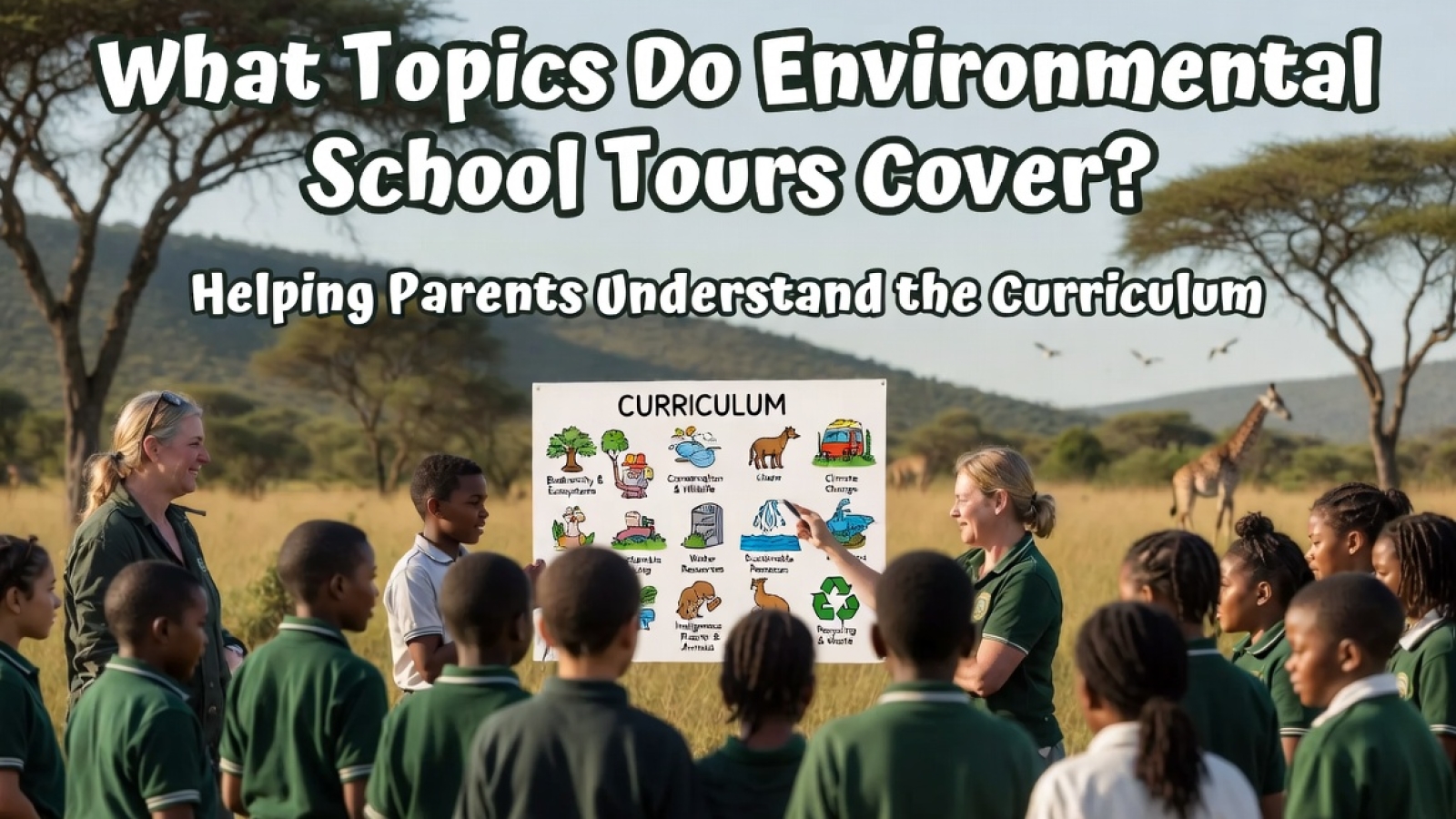
Helping Parents Understand the Educational Value Behind Outdoor Environmental Learning Experiences
Some Lessons Are Better Learned With Mud on Your Shoes
There’s only so much a child can absorb from a textbook.
You can explain ecosystems in a classroom.
You can show photos of wetlands on a projector.
You can define biodiversity on an exam paper.
But when a student stands quietly beside a river, hears birds calling across the trees, watches insects moving beneath rocks, and feels the texture of soil in their hands, something changes.
Environmental education becomes real.
That’s why environmental school tours have become such an important part of modern learning across South Africa and beyond. These tours combine science, geography, sustainability, teamwork, and experiential learning into one immersive educational experience.
For many parents, however, questions naturally arise:
- What exactly do students learn on these tours?
- Are they educational or just recreational?
- How do they connect to the school curriculum?
- What skills do children gain outside the classroom?
The answer is: far more than most people realize.
Environmental school tours are designed to help students understand not only nature itself, but also humanity’s relationship with the environment, sustainability, conservation, and responsible citizenship.
In this article, we’ll explore:
- The key topics environmental school tours typically cover
- How these experiences support classroom learning
- The life skills students develop outdoors
- Why experiential education improves long-term understanding
- What parents can expect from a quality environmental education program
By the end, you’ll have a much clearer understanding of the educational value these tours provide — and why they can leave such a lasting impact on young learners.
Why Environmental Education Matters More Than Ever
Today’s Children Are Growing Up in a World Facing Environmental Challenges
Modern students are inheriting a planet dealing with:
- climate change,
- water scarcity,
- pollution,
- habitat destruction,
- biodiversity loss,
- and growing sustainability concerns.
Environmental education helps children understand these realities in practical, age-appropriate ways.
More importantly, it helps them understand that they can play a role in protecting the natural world.
According to UNESCO, environmental education encourages learners to develop:
- environmental awareness,
- critical thinking,
- problem-solving skills,
- and responsible decision-making.
Outdoor learning also improves engagement because students actively experience concepts instead of simply memorizing them.
As naturalist David Attenborough famously said:
“No one will protect what they don’t care about; and no one will care about what they have never experienced.”
That idea sits at the heart of environmental school tours.
Practical Tip for Parents
Ask tour providers how their activities connect to school subjects and learning outcomes.
Strong programs intentionally combine fun with curriculum-based education.
1. Ecosystems and Biodiversity
Nature Functions Like a Giant Living Puzzle
One of the most common topics covered during environmental school tours is ecosystems.
Students learn how living organisms interact with:
- plants,
- animals,
- insects,
- water systems,
- climate,
- and soil.
Instead of viewing nature as separate parts, children begin understanding how ecosystems function as interconnected systems.
Topics often include:
- food chains and food webs,
- predator-prey relationships,
- habitats,
- indigenous species,
- invasive species,
- and biodiversity conservation.
Students may participate in:
- nature walks,
- species identification,
- bird watching,
- pond studies,
- or ecosystem mapping activities.
Research from National Geographic Society shows that experiential environmental learning improves ecological literacy and long-term retention of scientific concepts.
Why This Matters
Understanding biodiversity helps children appreciate why conservation matters in everyday life.
Practical Tip
Encourage your child to talk about the species they observed after the tour. Reflection strengthens learning retention.
2. Water Conservation and Aquatic Ecosystems
Water Becomes More Valuable When Students Understand How Fragile It Is
In many parts of South Africa, water scarcity is a major environmental concern.
Environmental school tours often include lessons about:
- rivers,
- wetlands,
- dams,
- water cycles,
- pollution,
- and sustainable water use.
Students may test water quality, study aquatic organisms, or examine how human activities affect water systems.
These activities help learners understand:
- where clean water comes from,
- how pollution spreads,
- and why conservation is essential.
According to World Wildlife Fund, freshwater ecosystems are among the most threatened habitats globally.
Hands-on exposure helps children connect environmental responsibility to everyday behavior.
Practical Tip
After the tour, involve children in simple water-saving habits at home to reinforce what they learned.
3. Climate Change and Sustainability
Today’s Students Will Live With Tomorrow’s Environmental Consequences
Climate education is becoming an increasingly important component of environmental tours.
Students are introduced to concepts such as:
- global warming,
- carbon footprints,
- renewable energy,
- recycling,
- sustainable living,
- and environmental stewardship.
Importantly, quality programs avoid fear-based teaching.
Instead, they focus on:
- awareness,
- practical solutions,
- and responsible action.
Students may explore:
- composting systems,
- solar energy demonstrations,
- waste management practices,
- or sustainable agriculture projects.
According to United Nations Environment Programme, early environmental education plays an important role in building long-term sustainability awareness.
As climate activist Greta Thunberg has emphasized:
“You are never too small to make a difference.”
That message resonates strongly with young learners.
Practical Tip
Look for programs that encourage practical environmental action rather than only discussing problems.
4. Wildlife Conservation and Human Impact
Children Learn That Conservation Is About People Too
Many environmental tours introduce students to conservation challenges facing wildlife and natural habitats.
Topics often include:
- poaching,
- habitat destruction,
- pollution,
- deforestation,
- endangered species,
- and responsible tourism.
Students begin understanding how human decisions affect ecosystems and animal populations.
In African environmental education settings, learners may study:
- savanna ecosystems,
- indigenous wildlife,
- conservation parks,
- or anti-poaching initiatives.
Seeing conservation efforts firsthand can be deeply impactful for students.
According to International Union for Conservation of Nature, education plays a vital role in long-term biodiversity protection.
Practical Tip
Ask your child what surprised them most about conservation challenges. Emotional engagement often drives deeper learning.
5. Geography and Earth Sciences
The Landscape Itself Becomes the Classroom
Environmental school tours often reinforce geography and earth science concepts in practical ways.
Students may learn about:
- landforms,
- erosion,
- rock formations,
- weather patterns,
- soil composition,
- and natural resource management.
Instead of memorizing definitions, they observe these systems directly in nature.
This kind of experiential learning helps abstract concepts become tangible.
Research in educational psychology consistently shows that hands-on learning improves understanding and memory retention compared to passive instruction alone.
Practical Tip
Children often remember outdoor experiences for years. Encourage them to journal or photograph what they observe during tours.
6. Indigenous Knowledge and Cultural Environmental Practices
Environmental Education Is Also About Human Wisdom
Some environmental programs incorporate indigenous environmental knowledge and traditional ecological practices.
Students may learn:
- how local communities historically interacted with nature,
- traditional conservation methods,
- sustainable farming practices,
- or cultural relationships with the land.
This broadens environmental understanding beyond science alone.
It teaches students that sustainability is not a new idea — many communities have practiced environmental stewardship for generations.
In African contexts, this can help children appreciate both environmental and cultural heritage simultaneously.
Practical Tip
Programs that combine science with cultural understanding often create richer educational experiences.
7. Leadership, Teamwork, and Personal Growth
Some of the Biggest Lessons Have Nothing to Do With Exams
One of the most overlooked benefits of environmental school tours is personal development.
Outdoor learning environments naturally encourage:
- teamwork,
- communication,
- resilience,
- confidence,
- leadership,
- and problem-solving.
Students may participate in:
- group challenges,
- navigation exercises,
- conservation projects,
- or collaborative environmental activities.
Away from screens and classroom pressures, many children develop greater independence and self-confidence.
According to child development research from American Academy of Pediatrics, outdoor experiences support emotional well-being, social development, and physical health.
Practical Tip
Parents often focus only on academic outcomes, but personal growth is one of the most valuable parts of these experiences.
How Environmental Tours Support the School Curriculum
Outdoor Education Isn’t Separate From Learning — It Expands It
Environmental tours often reinforce multiple school subjects simultaneously, including:
- Natural Sciences,
- Geography,
- Life Sciences,
- Social Sciences,
- Environmental Studies,
- and Life Orientation.
Students learn through:
- observation,
- participation,
- experimentation,
- reflection,
- and discussion.
This strengthens both understanding and engagement.
Experiential education also helps students who may struggle with traditional classroom learning styles.
For many children, learning becomes more meaningful when they can physically experience concepts in real-world environments.
Practical Tip
Ask schools or tour organizers for curriculum links and educational objectives before the trip.
What Parents Should Look for in a Quality Environmental Tour Program
Not All Educational Tours Offer the Same Value
A strong environmental education program should include:
- qualified facilitators,
- age-appropriate activities,
- clear learning outcomes,
- safety procedures,
- structured educational content,
- and interactive experiences.
Look for programs that balance:
- education,
- engagement,
- physical activity,
- and reflection.
Good programs encourage curiosity rather than overwhelming students with lectures.
Questions Parents Can Ask
- What educational topics are covered?
- How are activities supervised?
- Are facilitators trained in environmental education?
- How does the tour support the curriculum?
- What safety measures are in place?
- Are students encouraged to participate actively?
Practical Tip
The best programs leave children excited to keep learning long after the tour ends.
Environmental School Tours Help Children See the World Differently
Environmental school tours are about far more than outdoor recreation.
They help students:
- understand ecosystems,
- explore sustainability,
- develop environmental awareness,
- strengthen teamwork,
- and connect classroom learning to the real world.
Most importantly, they help children build a relationship with nature itself.
And that relationship matters.
Because children who understand the natural world are more likely to protect it, respect it, and care about its future.
In a world increasingly shaped by environmental challenges, that may be one of the most valuable lessons education can offer.
Leave A Comment